Building relationships with students is an integral part of teaching. When students feel safe and supported, they are more likely to engage in learning and build the confidence needed to succeed intellectually and personally. And one of the best places to build these bonds is school camps! 

Free from inside the four walls of a classroom, adventure camps provide countless opportunities to connect with your students through a variety of thrilling activities that enhance learning outcomes, while also promoting trust, teamwork, and personal growth.

In this article, we’ll explore why building relationships with students is so vital and how school camps create the perfect environment to do just that. We’ll also share some practical tips and activity ideas to help you get the most out of your next adventure camp experience.


Why building relationships with students is important

Beyond day-to-day interactions, strong student-teacher connections help to shape young people’s experiences at school, laying the foundation for positive behaviour, emotional wellbeing, and academic performance. 

Here’s why building relationships is so important: 

Builds trust

Trust is the cornerstone of every strong relationship. Students who trust their teachers feel safer, more confident, and more willing to participate in class or extracurricular activities. Whether they ask a question in class, share a personal concern, or try something new like Netball or public speaking, trust gives students the courage to engage. 

How to develop trust with students: 

  • Be consistent and reliable: Stick to your word and follow through with promises, even small ones. If you say you’ll check in on a student tomorrow, make sure you do.
  • Create a safe space: Encourage open dialogue where students feel comfortable expressing opinions without fear of ridicule. Acknowledge their contributions and show that their voice matters.
  • Respect student confidentiality: If a student shares something personal, be mindful of their privacy (unless it’s a safety issue). This shows respect and integrity.
  • Be authentic: Students can sense when teachers are being genuine. Share appropriate experiences, show vulnerability when it’s relevant, and model honesty.

Enhances academic engagement and motivation

Strong relationships with your students can significantly boost their engagement and motivation for learning. It creates a sense of belonging, helping students recognise that they are seen and valued as individuals. Plus, knowing their teachers believe in them inspires greater effort and commitment to excel in studies, homework, exams, and coursework.

How to enhance academic engagement and motivation: 

  • Recognise effort, not just achievement: Celebrate persistence, problem-solving, and improvement. A simple “I can see you really tried on this” can make a big difference.
  • Link learning to students’ interests: Whenever possible, relate content to real-world situations or things students care about like sport, music, or pop culture. 
  • Set achievable expectations: Show students you believe in their potential by setting clear goals and helping them reach them. Scaffold tasks to slowly but surely build their confidence.
  • Offer choices: Providing options for how students complete a task (e.g., written report, oral presentation, video project) gives them ownership over their learning.

Improves student behaviour

Furthermore, positive relationships often lead to better behaviour. Respect for and from teachers encourages students to act thoughtfully and reduces the likelihood of disruptions. They come to see boundaries not merely as rules but as essential elements of a respectful and fair learning environment.

How to improve student behaviour: 

  • Model respectful behaviour: Speak to students the way you want them to speak to others. Your tone, body language, and consistency all set the standard.
  • Use restorative practices: When conflict arises, use it as an opportunity to repair and rebuild rather than simply punish. If a student is disrespectful to a peer, help them understand their impact, take responsibility, and agree on how to make things right.
  • Catch students doing the right thing: Reinforce positive behaviour by acknowledging it publicly and privately. Praise reinforces values more effectively than punishment alone.
  • Build rapport before correcting: Use their name, and frame behaviour redirection to show belief in their ability to improve.

Increases self-esteem and reduces stress

Relationship-building also contributes to an increase in self-esteem. With support from their teachers and peers, students begin to see themselves as capable individuals ready to tackle obstacles with a more positive mindset. Moreover, having a trusted adult to turn to can make all the difference. 

How to boost student self-esteem: 

  • Provide genuine, specific praise: Instead of vague compliments like “Good job,” offer feedback that highlights effort and growth: “You really took your time planning that presentation, and it paid off!”
  • Avoid comparisons: Celebrate each student’s unique strengths and progress. Comparing students to each other can harm confidence and create unnecessary competition.
  • Give students responsibilities: Classroom jobs or leadership roles signal trust and help students feel valued. When they see that you believe in their abilities, they’re more likely to believe in themselves.
  • Support a growth mindset: Teach students that making mistakes is part of learning. Encourage reflection and remind them that improvement comes with effort and practice.
  • Check in regularly: A simple “How are you going today?” can go a long way. It shows students they’re more than just a number in the classroom; they’re individuals who matter.
  • Create opportunities for success: Set students up for achievable wins. When they experience success (no matter how small), their confidence increases, and their willingness to engage grows.

Creates a positive classroom environment

When relationships flourish, so does the learning environment. A classroom built on trust and mutual respect is calmer, more collaborative, and more productive. Students are likely to support each other, contribute meaningfully, and take pride in their learning space. 

How to create a positive classroom environment: 

  • Nurture a culture of inclusion: Make every student feel like they belong. Learn and use their names, celebrate different cultures and backgrounds, and ensure that everyone feels seen.
  • Encourage peer relationships: Facilitate group activities and seating arrangements that promote teamwork and peer-to-peer support. Relationships among students are just as important as those between teacher and student.
  • Use positive reinforcement systems: Reward collaboration, kindness, effort, and initiative, not just academic results. This helps reinforce the values you want your classroom to embody.
  • Start each day with a fresh slate: Allow students to reset after a tough day. Avoid holding grudges or bringing yesterday’s behaviour into today’s lesson.


How to build relationships with students at a school camp

In a fresh outdoor setting, you can build trust, encourage teamwork, and discover new sides to your students. Here’s how to make the most of school camp to strengthen those relationships.

1. Build a genuine rapport

This is arguably one of the most valuable things you can do with your students, especially with younger students. You can build trust on camp by letting your students know that you’re there to help them and someone to count on, whether it’s offering encouragement during a challenging climb or simply listening when they need to talk.

PGL ‘Groupies’ are super-friendly and always on-hand to support yourself and your students to grow and develop that bond of trust. By being that support away from home, you can see huge benefits in the relationship with your class!

2. Have a 1-on-1 chat

Do you need to discuss anything with individual students while at camp? Having a one-on-one chat offers the chance for students to speak with you privately about any concerns they may have or just to ask about their hobbies, family, or aspirations for the future. 

At school camp, a quiet moment around the campfire or during a bushwalk activity can open the door to meaningful conversation. It demonstrates to students that you care about them as individuals, not just as learners.

3. Get to know more about your students

With the variety of activities available at school camp, you’ll get to see what kinds of things your students like and don’t like, how they react to different situations, and where they could use some extra support. 

For example, a student who seems quiet in the classroom might shine during a team-based challenge, showing strong leadership or problem-solving skills. On the other hand, a typically confident student may struggle with unfamiliar tasks like navigating an orienteering course. With our 100% instructor-led activity sessions, you get more time to observe, bond, and focus on your students as individuals!

4. Empower students with responsibilities

Let your students take the lead. Assign them roles such as team captain, raft building designer, or strategists for a game of aeroball. Leadership roles give students a sense of ownership and purpose, showing them that their ideas and efforts matter.

Again, it sends a strong message to students that you trust them. It also helps students develop valuable life skills like decision-making, communication, and accountability. For instance, putting a student in charge of managing equipment during raft building means they must organise materials, delegate tasks, and ensure their team stays on track. 

5. Promote teamwork and collaboration

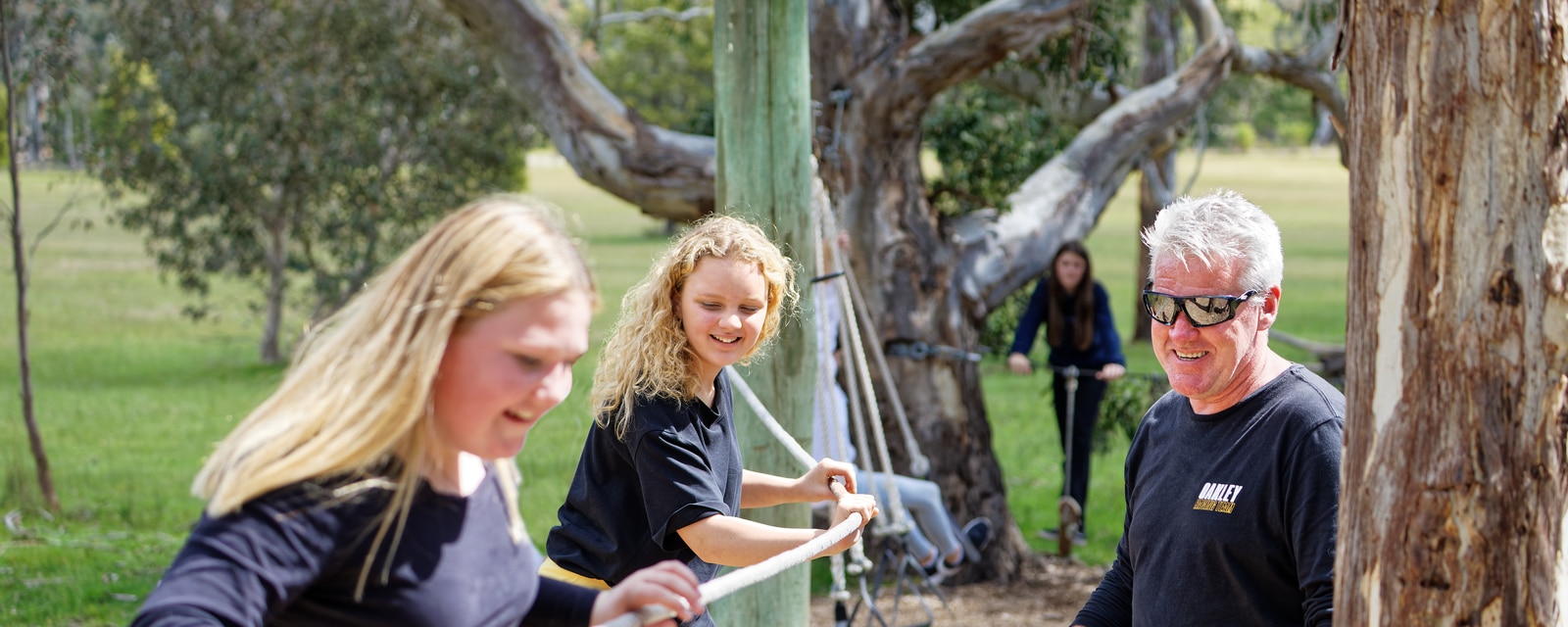
Strong relationships lay the groundwork for teamwork and collaboration. Camp activities such as canoeing or Jacob’s ladder reinforce respectful communication, shared responsibility, and collective problem-solving. When students work together towards a common goal, they learn to listen, compromise, and support one another. 

As a teacher, your role is to guide rather than direct. Step back and let students solve problems together, stepping in only when needed. Be present to celebrate their efforts, encourage inclusiveness, and help them reflect on how they worked together.

6. Celebrate victories, big and small

No matter the size of the achievement, every success is worth celebrating. Whether it’s taking a leap of faith despite feeling nervous or hitting a bullseye during archery, these moments show students that their courage and effort are seen, valued, and appreciated. 

At school adventure camps, you have more freedom to praise students in meaningful ways. That may be a public shout-out during dinner for a team’s cooperation or a quiet “well done” to a student who overcame a fear during an activity. You can even set up small awards or tokens of recognition to reinforce positive behaviours and achievements.


Adventurous relationship-building activities

Designed to promote teamwork, communication, and trust, our exciting range of activities helps students grow together and have plenty of fun along the way! Some of our top picks include:

  • Raft Building: In raft building, students work in teams to construct a floating raft using ropes, barrels, and planks. It’s a hands-on challenge that demands communication, leadership, and creativity.
  • Challenge Course: A challenge course (sometimes called an obstacle course) offers structured physical challenges that test courage, strategy, and team dynamics.
  • Orienteering: Combining navigation and teamwork, students use maps and compasses to find checkpoints. It’s a mental and physical adventure that encourages collaboration and builds resilience.
  • Jacob’s Ladder: A classic team-building exercise where pairs or groups climb a huge, uneven ladder made of logs or ropes. It requires trust, strategy, and full cooperation.


Develop your student relationships with PGL

Now you know how to build relationships with students at camp, why not experience some of the PGL magic for yourself on a school camp trip? Check out our school camps in Queensland and Victoria, which include primary school camps and secondary school camps.

Your group are at the heart of what we do. We put safety first with 100% instructor-led activity sessions, which also allows you to bond with your students rather than running the sessions yourself, as you usually would in the classroom. Your PGL Groupies are also always available for any questions you or your students may have, just ask!

Why not contact us today and we’ll be on hand to help arrange a fantastic school camp for you and your group!